


Lifestyle traps and the modern world
The mass of men lead lives of quiet desperation. - Henry David Thoreau
Two years ago, we published our post on lifestyle traps. For us, it feels like it was 3 months ago. Guess it is true that time flies when you are having fun? Reality? Things are changing rapidly. So it only feels right to revisit the same concept… But more in-depth. Better. Different. We are bringing you a list of reality checks, a bit of mindset around it, and lifestyle traps to avoid.
Defining lifestyle traps
The lifestyle traps
How does one define lifestyle traps? One could argue that they describe a pattern in which your everyday choices push you toward something you do not want. Or you don’t even think about them in the first place. Coming down to pushing you against your own vision and goals (even your ideals). If we are more direct, we would say that anything that holds you down or limits your ability to reach your full potential is a lifestyle trap.
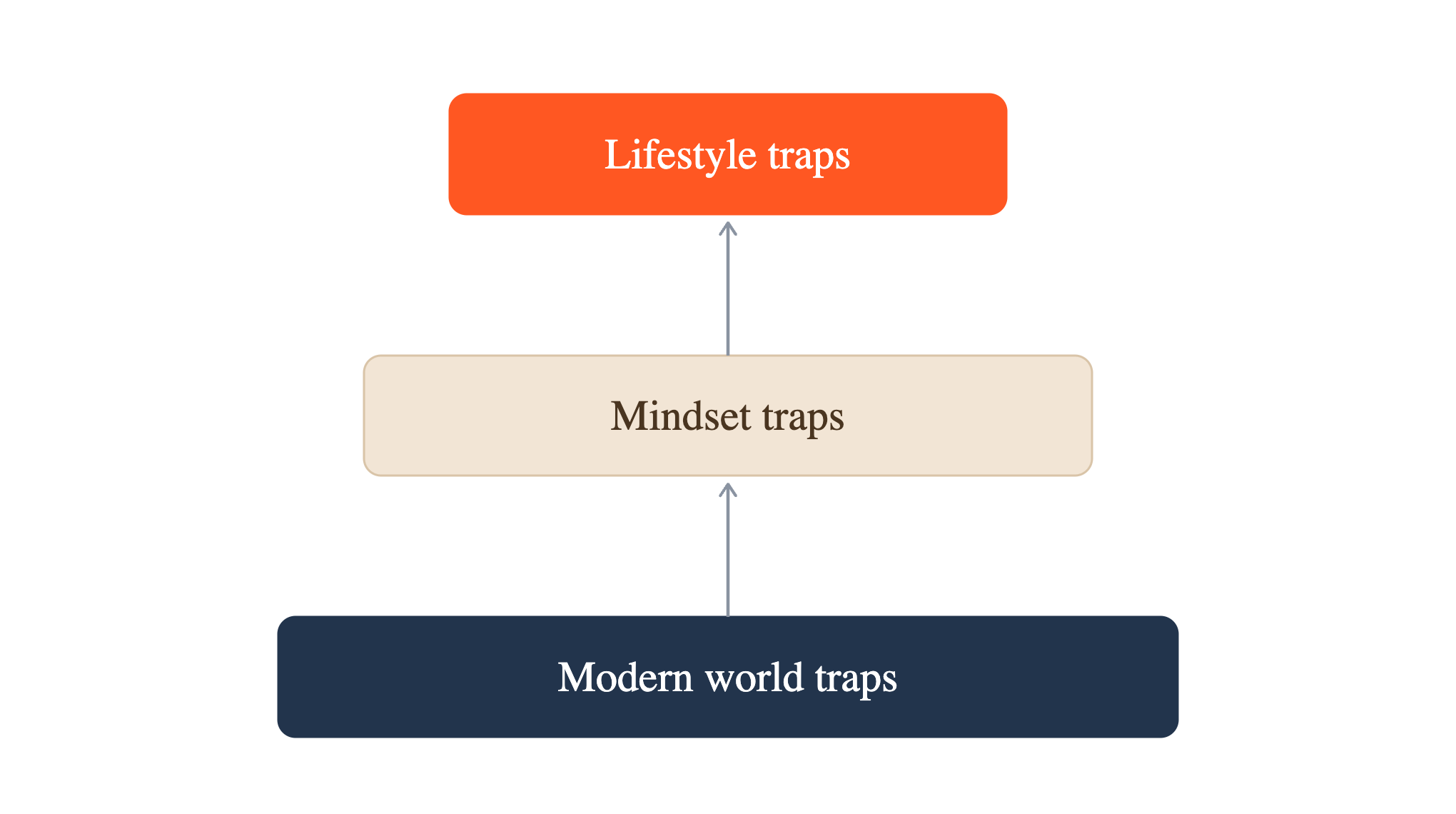
The thing about most lifestyle traps is that they have long-term consequences. You never even think about them until it is too late. One way to battle that is to run everything through your own filter. Ask yourself whether the choice you are making will have a long-term impact, or if it is something you will be able to stomach with a bit of effort. Unfortunately for the masses. No one does this. Quite the opposite. Most lifestyle traps are products of blindly following the masses.
Mindset and the rules (society programming) of the modern world don’t help either. When you start breaking everything down. It all turns into the cycle most never manage to escape, compounding negative choices into a permanent state of survival mode. To the point where all those lifestyle traps you can’t get rid of become so normal to you that they become part of your identity.

The mindset traps
Mindset problems always start when you start to compare yourself to others. Your friend got a new leased luxury German car? Now you want one. A work colleague got a new apartment overlooking the city? Who cares that he will have to pay it off for the next 30 years… You want one as well. Your goal was always freedom, but you are spending a ridiculous amount of money on flashy goods.
Only you know why…
Similar to the point above, all these choices compound. They work against you and your bigger vision by influencing your choices. As time goes on, your internal self-belief system has to adapt and incorporate new beliefs to function. Working hard to self-rationalize bad moves to make them look good to your subconscious.
The identity (new beliefs and self-rationalizing) part starts to make sense once your best friend changes his opinion about things he has never even considered before. He is pushed by someone else into doing them, internalizing the belief that it is normal and that he should too. A mortgage is a perfect example, especially when people get into their 30s and are looking to settle down. Because others around them told them it was the right thing. This proves that beliefs that seem normal to the masses are… Just wrong.
The modern world traps
It is impossible to ignore what is happening around us and how it influences us. Both the lifestyle choices we make and the mindset we have. Things have lost their sense. To the point where it feels like everyone is treating their lifestyle as a lottery ticket. From simple choices to more serious ones. Look at the growth of gambling year after year. People are feeling desperate and are looking for alternative ways to get out. Mechanisms that grab your attention, leaving you feeling busy 24/7 with meaningless priorities and 0 outcomes. Stripping you further away from any ability (time or power) to think of how to get out of your situation.
It should come as no surprise, considering that the average person has never felt more helpless. Not being able to afford a home as their boomer parents did. Feeling uncertain about what will happen to their role, given how fast AI is progressing. Perfect cocktail of desperation to make you feel like your only way out is to rely on a hit it big type of play.
Think about it for a second...
And you will see the polarities and why most people never get anywhere. What you have to do is figure out which games are worth playing and which ones you should avoid at all costs. Before you find yourself in one of the lifestyle traps.

Lifestyle traps you want to avoid
1. Building life around other people’s expectations
When was the last time you did something for yourself? Not because others told you it was the right thing to do? But because you wanted to. If you reflect on your life, there is a good chance that every big thing you have done came from someone else’s expectations.
When you are not sure what you want or who you are, you start borrowing others views of success. How to do things or what is right. Or wrong... Making it part of your identity. Spending enormous amounts of time and energy trying to adapt yourself to them. An example everyone can relate to is when you are young. Most of the big ideas you have come from your parents. As you get older, it becomes more about your coworkers, friends, and those who show up on your social media.
Why is this a lifestyle trap?
Because one day you will wake up, realizing that you did not make every single decision that had a big impact on your life. Others made it for you. Entering school, choosing a career, selecting a partner, buying a house, and taking on debt. Once that happens, there is no going back. You will find yourself unsatisfied because most of those choices were not yours. It was all done because you tried to make someone else happy without thinking it through or realizing the consequences.
How those choices impact you:
Limits you from reaching your true potential
Limits you from knowing who YOU are
Limits you from being able to say that this is what you wanted
There is a good reason we are starting the list with this… We want you to ask yourself a simple question that tells you everything about your current situation.
If I kept living exactly the life I am living right now. Doing everything I am doing right now. Forever without being able to change anything…
Would I actually enjoy it?
Or am I doing things this way because someone else told me it was right?
2. Index fund approach to your life
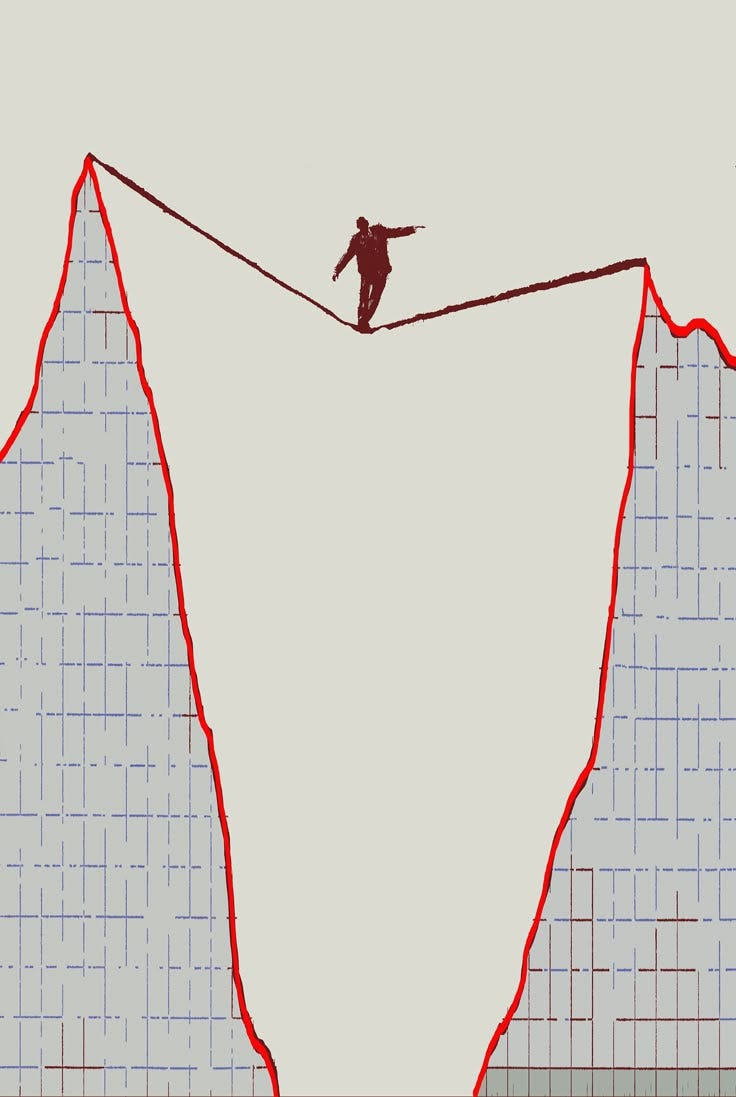
There is a double meaning behind our take here. Not in the sense that investing in index funds is bad (it is not). But in the sense that treating every single area of your life as an index fund is a trap.
Everyone reading this knows someone who has multiple projects going at 20% effort each. Because going all-in on any single one feels too risky. Diversifying everything and risking nothing. Never letting any single bet get big enough. Putting themselves in a position where they cannot see much larger opportunities, because none of the bets are meaningful enough to allow them to do big things.
We could argue that it comes from an underlying fear of risk. Fear of exposing yourself to uncertain situations you don’t want to find yourself in. If you spread yourself across multiple projects, it means that there is no big failure that could hurt. At the same time, it is the same reason none of them ever become anything big.
When does it become a trap? It was never anything but a trap. One that becomes much more of a threat when you realize that by never giving in and exposing yourself to uncertainty. You are removing yourself from situations that would provide you with massive upside. Do you believe someone approaching their life as an index fund would be able to spend on uncertain things? Buying ads or trying to get things off the ground on their own? Not really. Moving to another country because there is an opportunity? Good luck with that.
Justified risk is one of those things that should be worked on and encouraged. Index investing works... But treating your life as an index fund does not.
3. Programmed by mediocrity
Take a few minutes to go through this. Whose lifestyle do you find impressive? Once you figure out an answer. Ask yourself the opposite. Whose lifestyle do you despise and would never want to live like? To finish it up… Follow up on what one group does that the other does not.
We could argue that the first group is programmed by mediocrity, while the other belongs to those who create their own rules...
This is at least what it feels like will be the case for most.
To a point where the first group is unable to think of anything else or see things for what they are. This all comes down to finding yourself in a dangerous middle where you never have enough to change. Yet never good enough to push yourself out of that middle. The reason it is a clear trap is that being mediocre is comfortable enough. It doesn’t hurt, which means there is no reason to change it.
There is no crisis coming, and no one will put you under any high pressure. It feels like people who are stuck in this trap didn’t have ownership of their decision in the first place. They just found themselves in that mediocrity and adapted to it. Never challenging anything happening around them, because that is how things are supposed to be done. Normies, average, NPCs or whatever you want to call them...
How to recognize you are dealing with someone mediocre:
Fully run by emotions rather than by decisions and logic
Victim mentality (treating your choices as things that happen to you)
Taking mainstream advice as it is
Living for the weekend
Playing status games and going after prestigious titles (more on that below)
Going through multiple identities every few months instead of sticking to one thing
Fearing what others will say about them
The other group? Opposite of it all. This is where it should become obvious that you should ask yourself whether things are happening to you or you are making them happen. The first group never does that…
4. Never learning how to sell
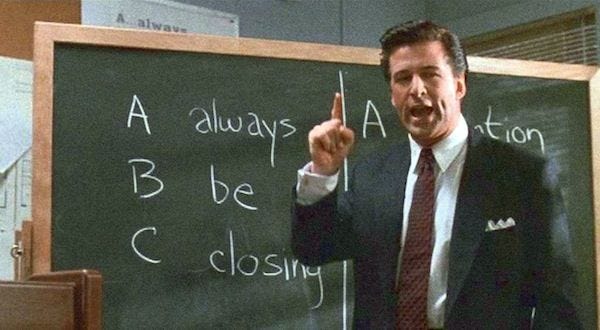
We feel ridiculous having to repeat this over and over on our website. But if you had to take only a few things from our entire website… Make sure it is this idea. The work you deliver will never speak for itself. Neither will your resume. Neither will your skill set.
It is all a lie you have been sold.
When we say "selling" what we mean is planting your ideas in someone else’s head and getting them to believe there is something in it for them. That they are getting more than they are giving.
The reason we are covering this scenario is that it all comes down to:
Attention economy (everyone is trying to get their part of the cake)
AI has flattened the playing field, and the technology is much more accessible than it used to be. The bottleneck is no longer building things but getting them in front of others.
When learning how to sell yourself, your work, and your ideas...
It all comes down to:
Exposure (putting yourself out there)
Adaptability (different groups, interviews etc.. need different approaches)
Social skill (should be self-explanatory - it is the baseline for selling)
Knowledge (you can only BS for so much, you need at least something to back it up)
Risk (the gap between what you claim and what you can back up)
All the factors above directly impact others perceptions of you. It is a layer for everything else that comes after it. Why does it matter? Because every single area that matters in your life comes down to selling yourself.
Business (pitching, branding, partnerships)
Career (interviews, promotions, negotiating)
Social life (relationships, impressions, getting invited back)
It should be pretty clear what it is all about and what you should do. The best part about selling yourself is knowing how to sell. The second best part? You can learn it all. The only need is not being afraid to put yourself out there and do what others around you will not. Nothing worth having in your life will come to you. You will have to get out there and sell the same idea to others.
Read more:
And watch this legendary clip…
5. The sunk cost fallacy
Let us not become victims of a crippling reasoning pattern. If we want to improve our decision-making and critical thinking, we must recognize our mental biases and be willing to overcome them. Let us avoid creating arguments to confirm pre-existing beliefs at all costs and invest in a ‘sunk cost fallacy.’ Better alight from a car out of control than drive it off the cliff. - Erik Pevernagie
Knowing when to give up on something is a skill. Everyone knows it is hard to give up on something you have invested an enormous amount of time and energy in. Psychology plays a big role here, and the more you are invested, the harder it is. This is exactly why people get stuck in bad jobs or relationships, or end up surrounded by people they should not be around in the first place.
What gets tricky to write about is that there is no clear answer on when something is a sunk cost. When to walk away and when to stick with it.
In our books, it mostly comes down to being in a better position than you were a month ago (or a year ago). That is a clear sign you should continue what you are doing. That is not something you can apply to every situation... Such as relationships, where there are no real tangible outputs or metrics. But certain things, such as careers or business, do work with this approach.
When you approach it from an opportunity cost perspective, things change. Realizing that all the effort you are putting into things that are not working out could be spent on something that works. This clearly falls under lifestyle traps. Because wasting your time on things that will never work out in the end costs you all the other alternatives you never pursue, because you are 100% committed to one thing. On the contrary, a similar trap is being emotionally tied to something because it works. This is something we have fallen for before in our business. Never giving yourself enough space to explore something else because you fear letting go of something that is already working... It is another lifestyle trap. But much less common than the sunk cost fallacy.
6. If I just had _____ (insert something) I would be happy…
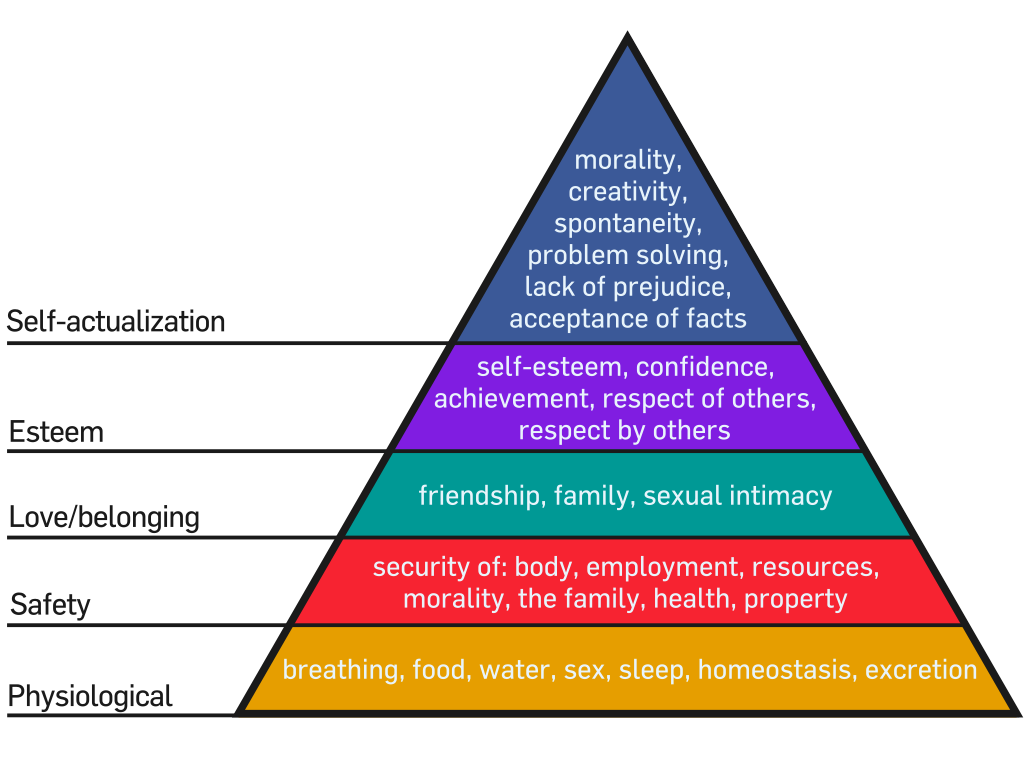
Not necessarily. Money is often the main pick. It makes things a lot easier, no doubt. You will not have to worry about bills, or you will have enough cash to take your family on vacation. That is a fair point. Once you get out of survival mode and move further into the safety zone. Over time, you will notice that your day to day life will not change that much… No matter how much money you have in your bank account. Which is hard to believe if you are not there. What about other things? What happens when you finally achieve what you have always wanted? It feels special for 20 minutes. After that? Void.
You have achieved your BIG goal, and now the question is what comes next?
In most cases, you lose motivation and can’t find a reason to bother at all. The reason this belongs under lifestyle traps is that it is part of the ego. What happens once you get what you have desired is the realization that the underlying motivator was never that thing. But something else is once again not satisfied. Yet you never figured out what it is. Meaning that once you are back at the starting point, a much better way to approach things is to find something you would do regardless of the final state (outcome) and stick to it. If that is something that gives you a feeling of aliveness, and you can pay bills with it, plus have enough to invest some of it on the side...
There is a good chance you hit the jackpot.
7. You are not your job title
After you meet a certain number of people who have made their career their whole identity... You quickly realize what is wrong with it. There is nothing worse than someone who can only talk about their job and what they did that day. What most fail to see is that by doing this, you are boxing yourself into the role you believe you are in. Being completely unable to adapt to anything else.
What most fail to see is the massive difference between how you view yourself and what actually makes you money. As long as you are treating yourself as your career (or any other identity), you are forcing yourself to be something. Filtering everything that doesn’t fit your ego and identity. Constantly running everything through a filter with questions like: how would doing it benefit my role ______ or how _____ would fit my lifestyle? This is a comical approach to living. Yet there are probably a good number of people you know doing exactly this.
When does this become a lifestyle trap?
Once it starts to commoditize you. When all of your judgments fall into this identity. Making you unable to pivot or see things for what they are. This is part of the programming you have gone through for years. Finance, law, medicine, and banking are the main careers that often fall for this. This happens because of the effort required to get those roles and keep them. If your goal is quality of life and high net worth... You will have to step away from your career identity and see things as they are. There is so much out there that your career identity is preventing you from seeing.
8. Lifestyle inflation
Get a raise. Buy a new car. Upgrade your living space. Get into debt to take a vacation. What comes next after you repeat the same and celebrate small wins over and over? Lifestyle inflation. Results? You are in the same place you were 2 years ago.
The common scenario looks something like this:
Work hard for years → get promoted → receive a salary increase → celebrate your raise → upgrade lifestyle (new car, apartment, or any other new monthly payment) → end up having the same amount of money in your bank account at the end of the month → erase all your progress
Repeat this over and over again, and it should be clear why most people are in the same place they were years ago. This does not mean you should not upgrade your lifestyle or buy high-ROI items to improve your quality of life. It means that you should be aware of what is happening and how it is impacting you and your goals. If your goal is to be one of the Joneses and keep up with your neighbors… You are on the perfect path.
Since we know that is not the case for most people reading this. Neither is it one of those lifestyle traps you want to find yourself in. What you have to realize is that this hedonistic approach to "you deserve it" comes at a price. If we approach this from a mathematical perspective, it should be painfully obvious. If you have the same amount of money as you had before your salary increase, you are playing a game designed for you to lose. Being in the same place you were before… Not any closer to your big vision. Meaning?
You are wasting your time.
We are not saying you should not celebrate those small victories or enjoy your money. Yet the problem is that you are doing it from a place that doesn’t take into consideration the big picture you are aiming at. To keep it simple. You want to get those promotions. You want to make as much money as possible. You want to improve the quality of your life… What you don’t want to do is find yourself becoming a victim of lifestyle inflation. Every year, you have more coming, yet you are further from your goals.
9. Not taking care of your health
It is easy to get lost in what you love. You feel good, make money, and think everything is going your way. After 2 to 3 years, you realize you have changed your appearance. Losing muscle, gaining fat… Imagine what your blood markers look like.
Money does buy you comfort around this stuff, but there has to be a wake-up call. Otherwise, you are playing a game that will rapidly reduce your quality of life without you even realizing it. From feeling worse with more brain fog to losing all your athletic capabilities.
This is no different from the average Joe scenario, in which the average Joe can’t wait to get home to watch TV and eat candies. There is no difference for your body. No matter what you are doing or what kind of impact you are bringing. Taking care of yourself is something you should never take for granted. No one can deny that the more demanding life you are living (stress, priority shifting, etc.), the easier it is to eat food that is not helping you in the long run. You want to avoid that and ensure that you are taking the best care you can to achieve those results others won’t. Even if you don’t care about the physical aspect, just from the psychological one. You will perform 10x better than someone who doesn’t take care of themselves.
Promise yourself that you will do it for the rest of your life:
The least you can do is hit the gym 3x per week. This is the minimum.
Prioritize sleep and figure out what works best for you to fight stress and feel refreshed.
You will never escape those two, so you might as well do everything you can to get the most out of them.
Go touch some grass and collect your 10k steps along the way. Simple yet effective.
10. Never realizing that everything you do compounds
Every single thing you do daily compounds. Either in your favor or against you. What most fail to realize and appreciate is the value of long-term compounding. Does this fall under the lifestyle traps? Because until you understand this, you will always approach things from a short-term perspective. Selling yourself short is a nice way to put it.
People, friendships, places, or your favorite books. They all get better as time goes on and decades pass. This feeling doesn’t show up until you reach a point in life when you feel satisfied with who you are and what you have done. One could say that life is entirely about this.
Basic reality check on compounding?
Start by asking yourself:
Do you see yourself doing the things you are doing now in the future?
Consuming the same material. Being surrounded by the people you are currently surrounded by… The answer will tell you everything. Whether you are compounding things in the right direction or wasting your time.
Read more:
11. Lottery ticket lifestyle

Most young people live under the impression that to win, you have to hit it big. The economy and the modern world we are living in don’t help this case. The gamblingification of everything doesn't help either. On top of that, add that over the last few years, people with minimal talent and skill sets have gotten lucky and hit it big. Getting rich from ridiculous things such as meme coins or because they managed to drive the trends.
They serve as an example themselves that those things are possible. No matter your skill set or experience level. Everyone is thinking they will hit it big and make it with minimal effort. It is a perfect formula to live a miserable life. Treating everything you do as a casino. Hoping to hit it big on the next try. Betting over and over again. To realize that you are in the same position for years, as time flies past you.
This is something we have been noticing specifically among young people. They feel it is wrong not to go all in on everything they do. Nonsense. Progress does take time. Yet it is something that most don’t want to admit to themselves. When you are putting your knowledge, skills, and experience into things... There is a reward waiting for YOU at the end.
At the same time, no one can blame people for falling for this idea. The situation for the average person has never been worse. Finding themselves in a helpless situation where they know that they are living a lifestyle that is far less desirable than that of previous generations. Not recognizing that opportunities are everywhere when approached with the right attitude and perspective.
12. Having just one source of income
Make yourself a promise that if you are over 20 years old and reading this, you will never allow yourself to be in a situation where you are fully dependent on a single income. Worst case scenario? That your employment income is the only source. It is one of the biggest traps you can fall into, and it indirectly dictates every single choice you make.
It comes down to two things:
You will always be dependent on someone else
The psychological aspect that forces you into the scarcity mindset
The first one should be straightforward. Why would you want to be dependent on someone else when, with a bit of effort, you could ensure that you are free from it? Having your own schedule and doing things your way. Not something you want? Give it some more thought. For others who are a bit more interested in it, what you have to do is promise yourself you will stick with it for 1 or 2 years and ensure you have that side income coming in. In our books, this is the biggest move you can make. Start another income stream and ensure you can count on it.
What about the psychological aspect?
This is a much more complex one. Once you have multiple income streams, you can finally start taking ownership of your life. YOU know who you are and what you bring to the table. YOU do what you want to do with your own rules. YOU choose how you spend your precious time. Suddenly, you will no longer care about what is happening around you. Whether it is the HR officer wanting to talk to you because you said something inappropriate during the meeting, or your employer going bankrupt. The more you can count on your income stream, the less worries you have.
When you find yourself in a position where side income streams can cover your employment income. All those emotions and limitations you had about yourself start to disappear. Over time, this gradually turns you into a different person. There is no more worry about having to put on the mask to pay the rent. Or play social politics to get promotions. It is all gone.
The funniest part? It only takes a bit of effort and time to reach that phase. Up to 5 years if you put in the real effort. The best way to put it? The more income streams you have, the easier your life will be. Make a promise to yourself. Investments, side businesses… The more = the better.
13. Useless metrics over cash flow
Followers, likes, viewers, subscribers, how many times you have managed to do this, and how many times you have managed to achieve that. It seems that one of the lifestyle traps of modern society is that everyone is looking for ways to showcase their worth, one way or another. It is in human nature, and you can’t go against it.
What you should ensure is that you never fall for any of those. This is even more important when the rules of the game change every few months, and there is a good chance that what you used to spend 100% of your time on is now less relevant. To the point of being irrelevant. What will never become irrelevant? Money in your bank account. Does that mean you have to position everything you do to make as much as possible? No. But if you are presented with a choice between optimization and what you should spend your time on. It is the money.
This deserves mention because, as time passes, we get more detached from reality. It will be even more important to know what REALLY matters and what you should focus on. What will never go out of style is the feeling of having money hit your bank account and turn your dreams into reality. Lessons in there.
14. Status and chasing status
Status buys respect from a particular audience. If you aren’t satisfied by your audience, sorry! There aren’t any refunds. At least the guy who got rich doing a job he hated can revenge-purchase a boat. - Jack Raines
The desire for approval. This is similar to the previous point about useless metrics and how optimizing for them is a trap in itself. All of us are constantly evaluating others around us. It is unavoidable. Given that society is built around rules, how you are perceived matters more than anything else. The example would be more obvious if you offered someone $350k to work as a garbage man and $150k to work as a lawyer or an investment banker. You already know what most people would choose, and it is not cleaning the streets.
What is the lifestyle trap here exactly?
That status means something different for everyone. What you find impressive might be irrelevant to someone. You want a Rolex and a Porsche? The person could be into outdoor activities and would rather have a Land Cruiser and a Garmin watch. What does this mean? That we often find ourselves spending decades on "status games" we should not be playing in the first place.
Some games are hyper-competitive by nature. Think big-logo companies, prestigious universities. Once again... No surprises. Those big opportunities disappear once everyone gets their slice of the cake. There is a big difference between applying for a job with 500 and 5,000 candidates. Does that mean you have to get THAT job or you are not worth it? Probably not.
There is a good chance that with a bit of maneuvering and playing around. You will be able to find something that might not look great on paper, but the extra free time you will have will allow you to build the lifestyle you want to live. As Jack put it in one of his posts…
Status games rule everything around us, so the question you should be asking isn’t "How do I opt out?" It is "Which status game should I be pursuing?"
Instead of blindly following the noise and doing whatever everyone else around you is doing. You are better off identifying status games that play to your strengths. Looking for roads less traveled that will give you similar if not even better results. The hard pill to swallow is that there are plenty of opportunities for those who are ready to put themselves out there.
15. Your partner, girlfriend, wife…
Marry the right person. I'm serious about that. It will make more difference in your life. - Warren Buffett
Buffett was right. As with many other things… What happens once you choose the wrong person to spend the rest of your life with? Hard mode. Those who have experienced it know there is nothing worse than giving 110% of your energy throughout the day for a better tomorrow. Just to come home and have someone complain that you are not doing things right or expect the impossible from you. It happens far more often than most would like to admit. We never love covering topics like this because it brings out relationship gurus and people full of copium around this. Our idea should be clear.
Being with someone you should not be with is a lifestyle trap.
To make things worse, add getting into debt with them to live somewhere (mortgage), having kids with someone you can’t stand, or just sharing the same bed every night.
It is one variation of living hell.
This is where it gets crucial that you never allow yourself to settle for something because you think you can’t do better or you are too scared to let it go. If things are not working out, make sure you don’t let yourself go deeper and deeper. Because it only gets worse from there.
16. I have enough time to do…
You don’t. Not because time passes fast (it does) or because this is motivational slop. But because there are a bunch of other things you will want to do, and those things will come and go as your priorities change. Most of the things you want to do, you will want to do by age 60. That doesn’t mean you will not do anything after that, but as time goes on, your capacity keeps dropping.
Where does it get interesting?
When you realize that in your 20s you could maintain extreme focus for 10 hours a day, and by your mid 30s you are looking at 6 to 8 hours max. This doesn’t include substance abuse. Imagine how things look once you hit 50. Self-explanatory. As you get older and your energy declines, it should become obvious that the quality of time is not the same.
Not even taking into consideration that if you start something earlier in your life... You have more time to get better at it and see exponential results. Whenever you find yourself in a position where you are coping with the feeling that you have enough time. It is on you to remind yourself what it is all about and what the problem with it is. The conclusion is simple.
What can be done should not be left for tomorrow.
Suppose we put aside the energy argument and what you have just read. Tim Ferriss calls this the "deferred life plan"
The conventional path of slogging through 40+ years of unfulfilling 9-to-5 work, delaying travel and passions, in the hopes of enjoying retirement during old age. - Tim Ferriss
This should at least make you think, or at least start moving you toward figuring things out. Better said what to prioritize, and how to do the things you want to do. Deferred life is nothing but a masked lifestyle trap… One you want to avoid at all costs.
Closing thoughts
The more aware you are of what is happening around you, the less likely you are to fall for one of these. It mostly comes down to building your life around someone else’s expectations, playing stupid games, and chasing status ideals that were never yours in the first place. Letting life happen to you instead of being the main curator of it.
Would it be realistic to avoid all of these?
Most likely not. None of us has managed to avoid them all. But just being aware of what they are, how they impact you, and what it will take to get out of them is already a big part of the game.
Make sure you are leading with the question (always):
If you kept living exactly like this (forever), would you be fine with it?
If the answer is no. You have a clear sign that you are doing something you should not and that it is time for a change. Arguably, that is the only piece of information you need to start doing something different.
Next week, we will be on a trip and will spend most of our time on the new update for our State of Mind… There is a good chance there will not be a new post. Given that the next one is #150, we have to ensure it is different...
Enjoy your Sunday!
Disclaimer: None of this is to be legal or financial advice of any kind.
best word of wisdom i’ve read in awhile. Thoroughly enjoyed it sir!
Appreciate your writing; thank you.